


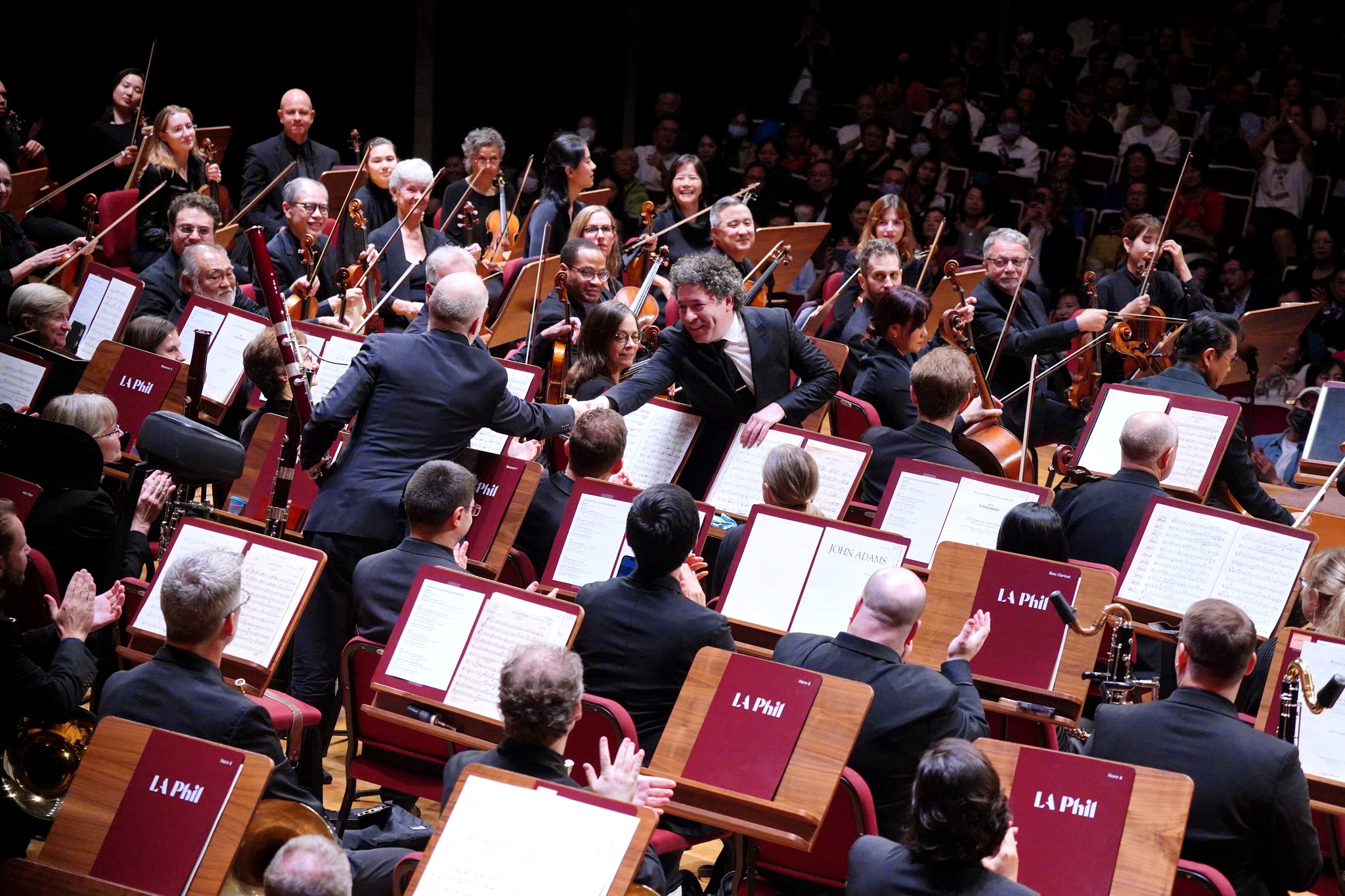
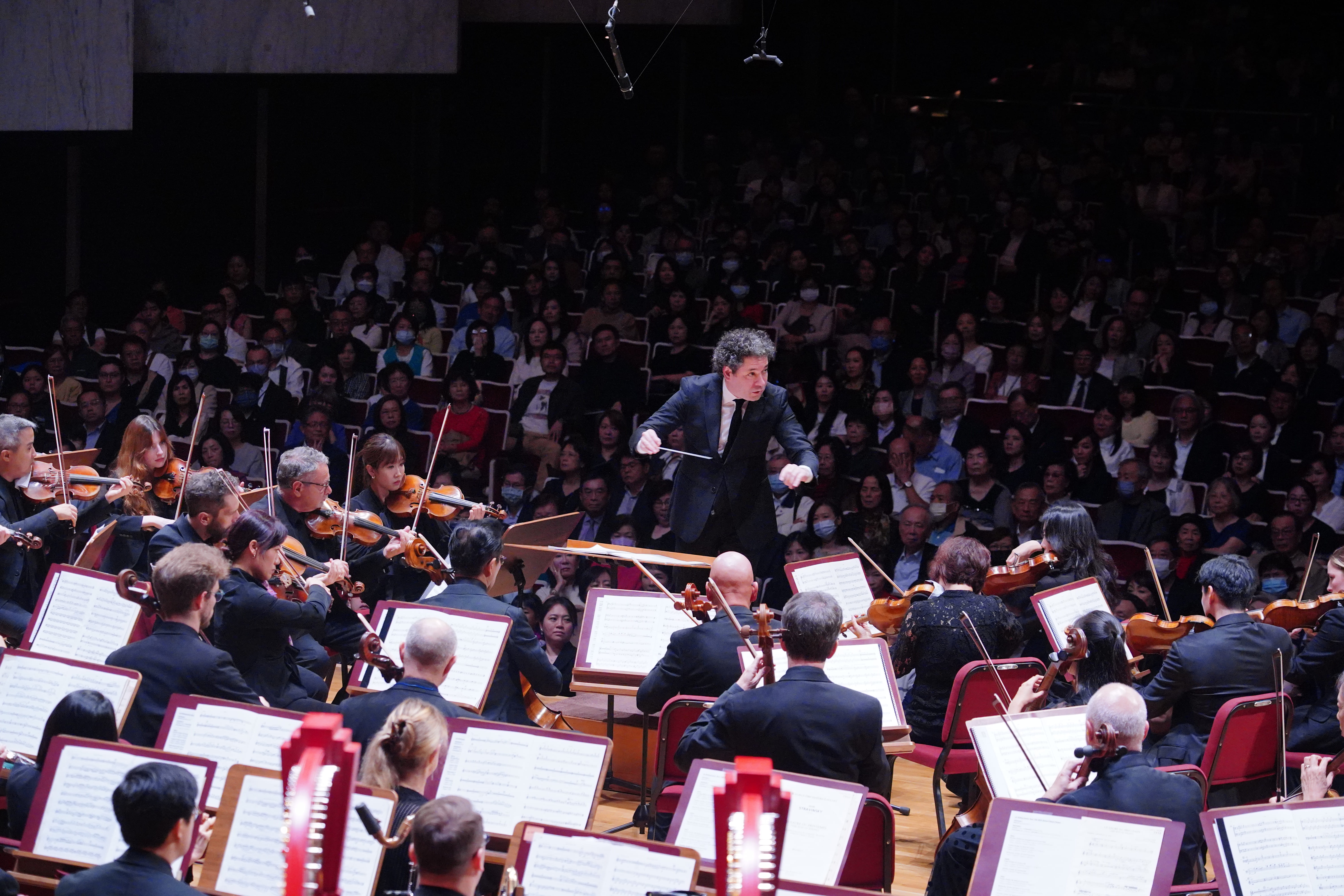
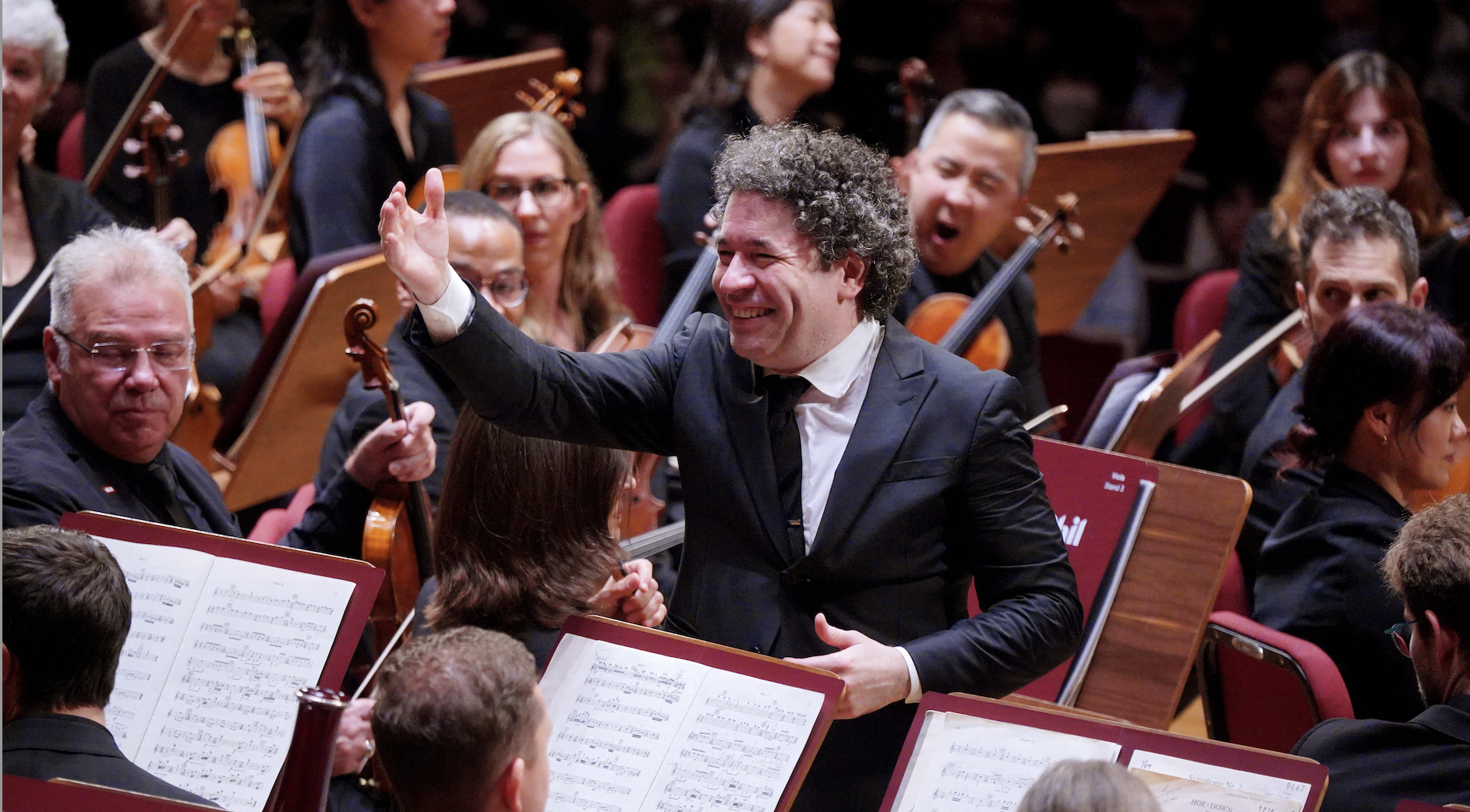
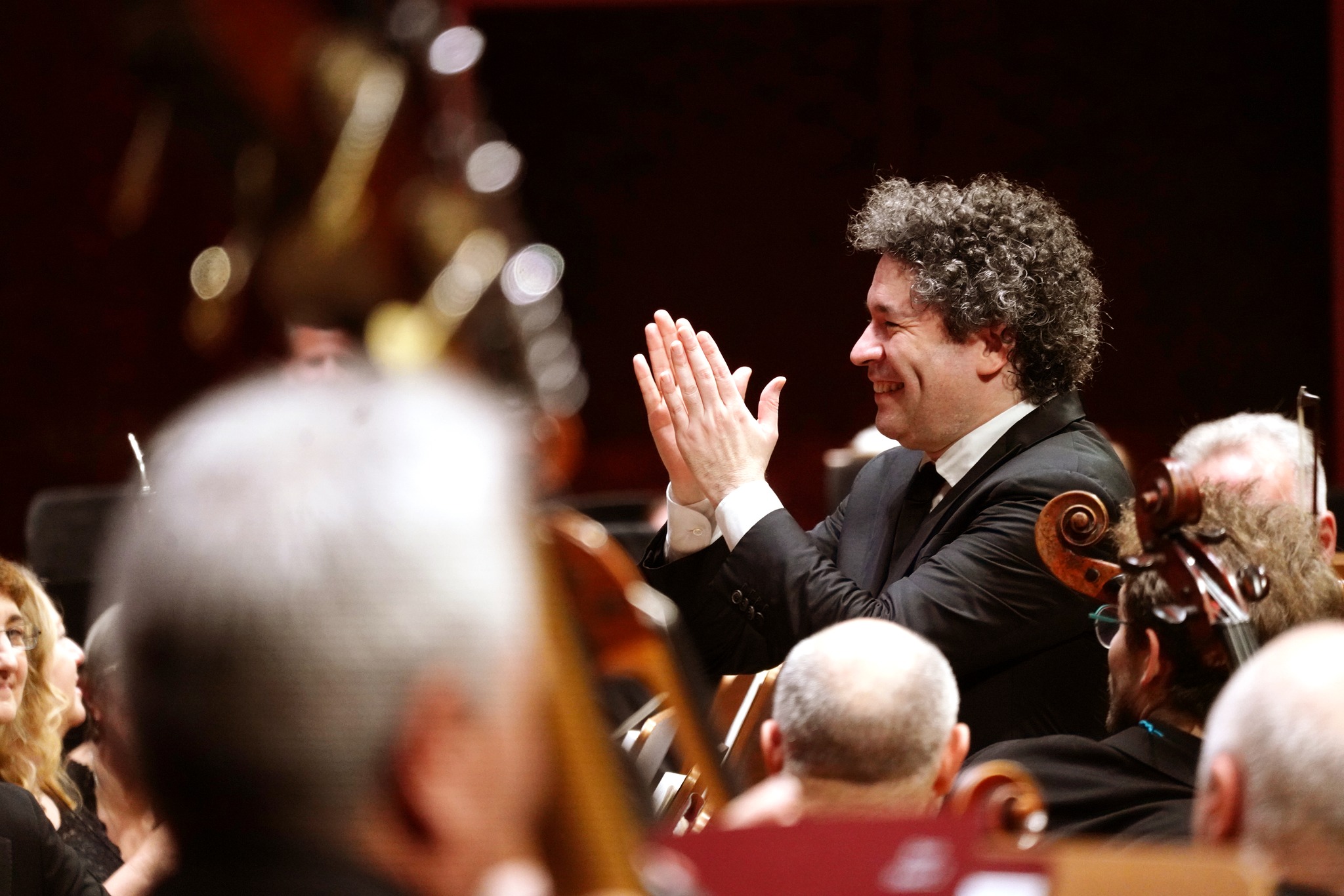
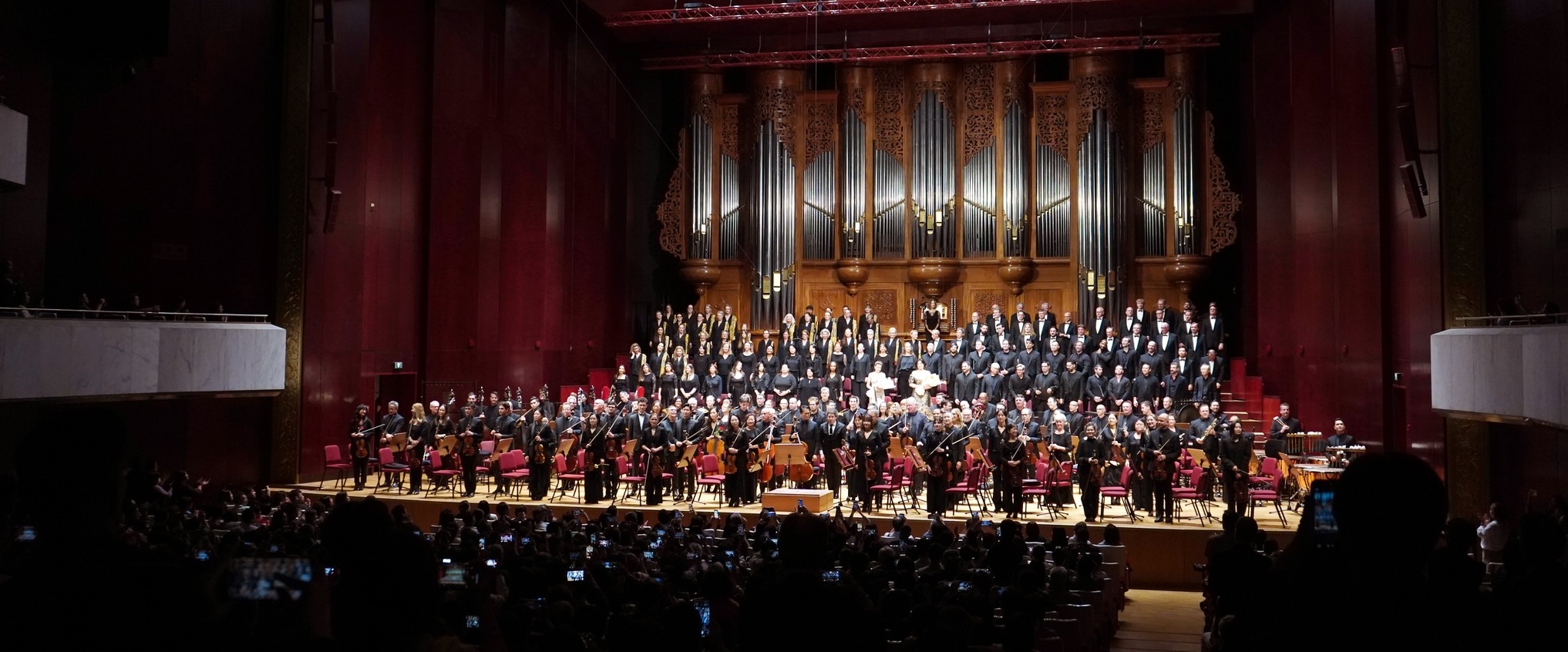
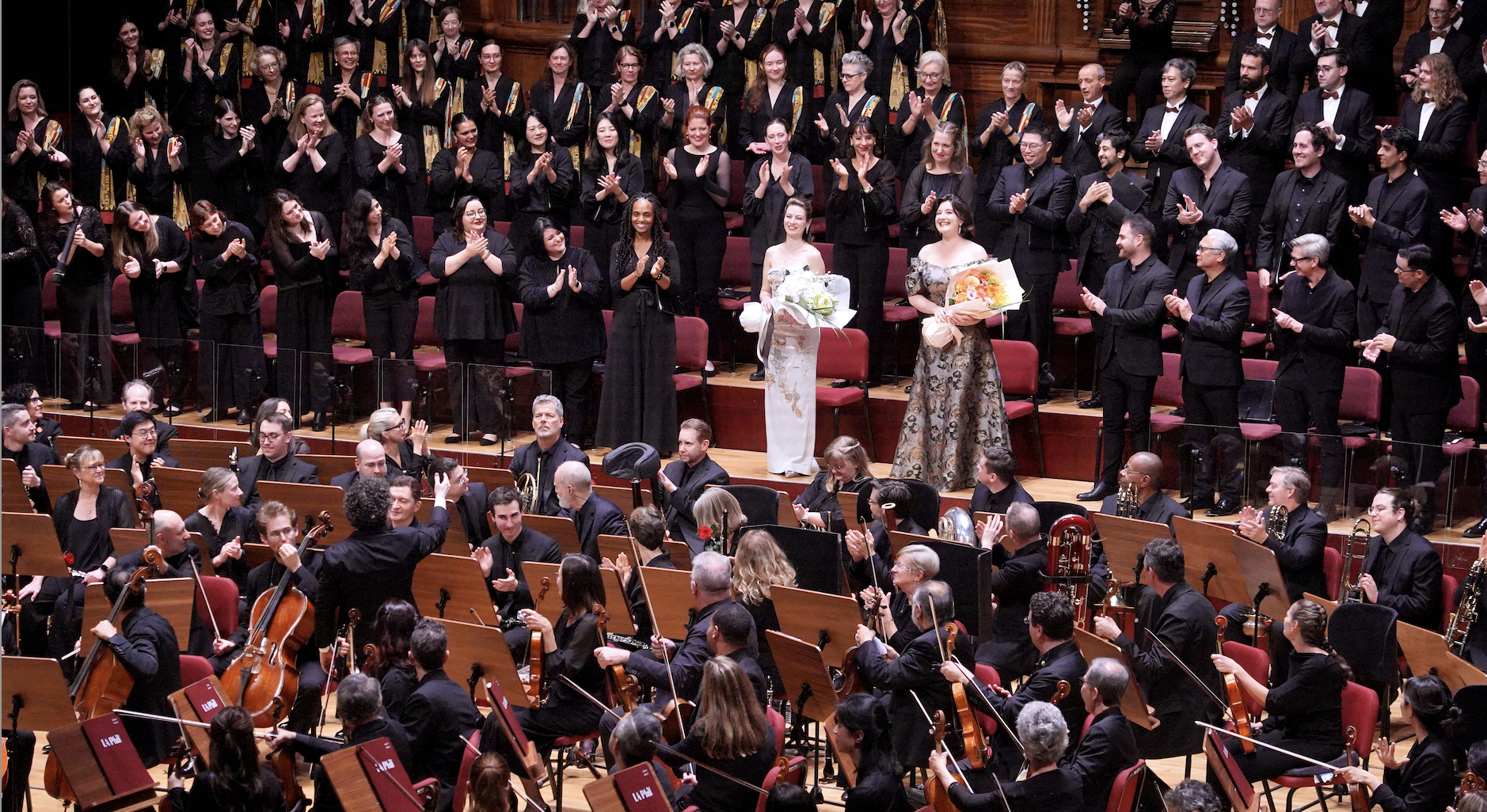
As the final note faded, Dudamel slowly lowered his baton.
For him, every encounter with Mahler’s Resurrection is a divine gift.
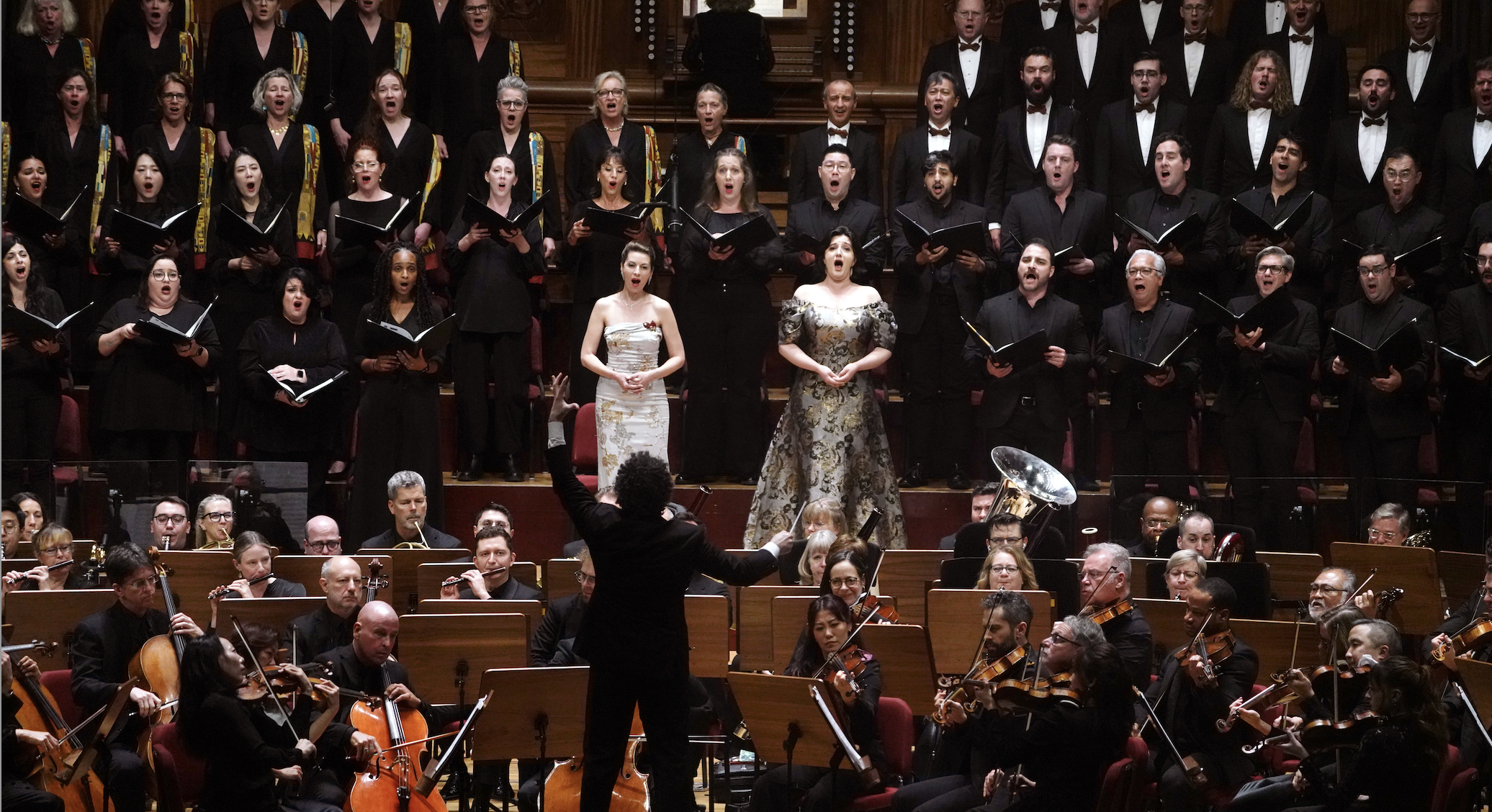
At yesterday’s rehearsal, gazing at the grand assembly before him — more than 250 musicians from the Los Angeles Philharmonic, the Vienna Singverein, and the Los Angeles Master Chorale — he spoke with deep emotion: “In Taipei, we met.”
Thunderous applause filled the hall, yet even more powerful was the silence that followed — that sacred stillness, the quiet tears after the final chord.
In that moment, Mahler’s vision of ultimate peace came alive at the National Concert Hall:
“Everything is bathed in blessed calm.
Look — there is no judgment, no division, no power nor submission, no punishment nor reward.”
We have always believed that music becomes eternal light.
As Dudamel said: “Humans cannot fly, but with music — we can.”
Tonight, over 250 musicians gave their all — with precision, fire, and devotion — to bring this journey to its most sacred close.
This “encounter and farewell” that transcends cultural boundaries gave the final chapter of the Asian Tour its deepest meaning.
Just as the chorus proclaims in the final movement:
“Oh believe, my heart, believe:
Nothing will get lost!
What you have longed for is yours! Yours, what you have loved, what you have strived for!”
“O glaube, mein Herz, o glaube:
Es geht dir nichts verloren!
Dein ist, ja dein, was du gesehnt, Dein, was du geliebt, was du gestritten! ”
#SpecialThanks: To EVA Air and BMW Taiwan for their generous co-sponsorship — making tonight’s performance truly unforgettable. ✨
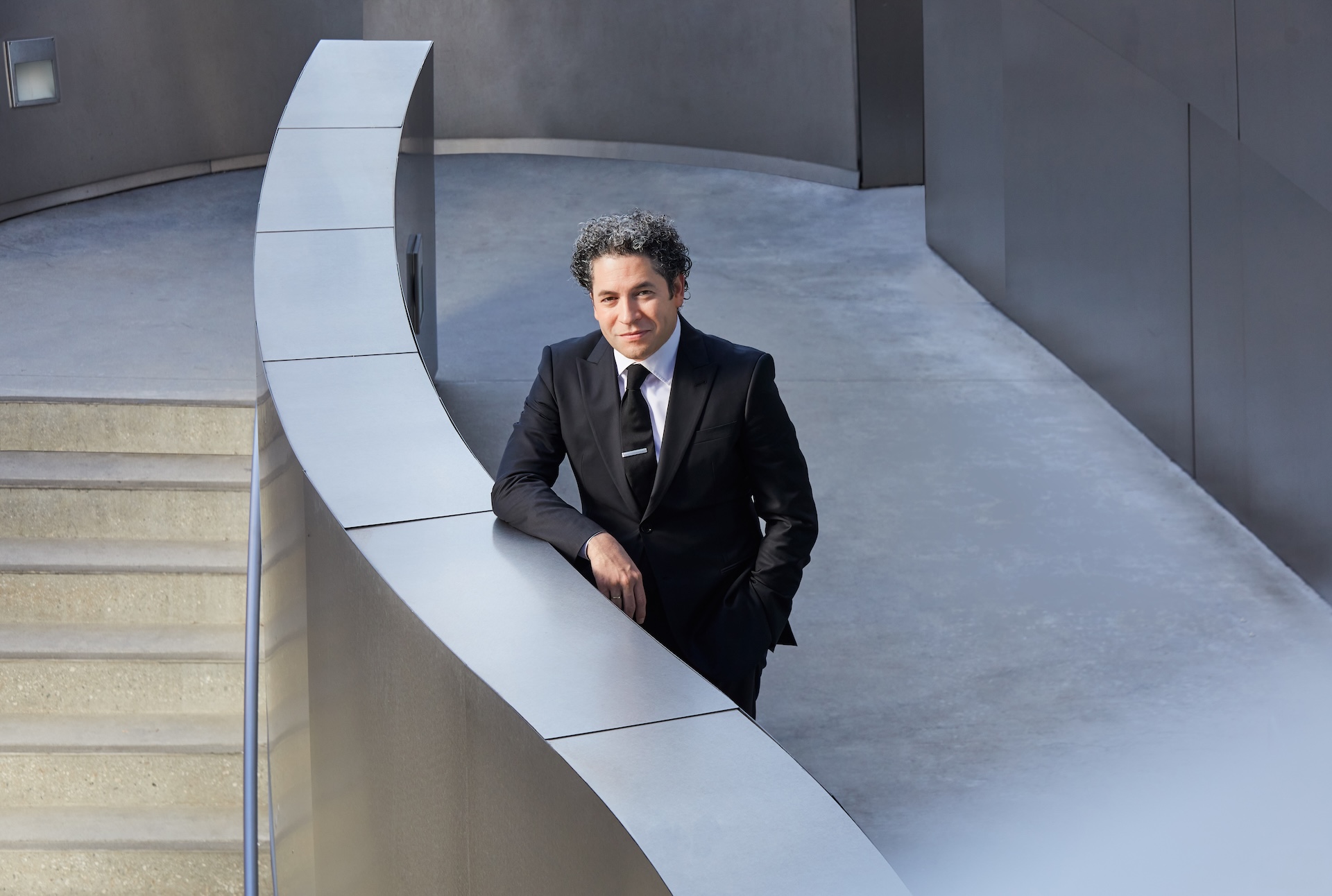
Born into a musical family in Venezuela, Dudamel was shaped by the internationally renowned El Sistema music education program. He began studying music at seven, made his conducting debut at twelve, and joined the Simón Bolívar Youth Orchestra at fifteen. In 2004, at just twenty-three, he won First Prize at the Gustav Mahler Conducting Competition, propelling him onto the international stage as a leading figure of a new generation.
His career has since taken him to the world’s most prestigious musical institutions, working with orchestras such as the Berlin Philharmonic, Vienna Philharmonic, and Royal Concertgebouw Orchestra, and appearing at major opera houses including La Scala, the Paris Opera, and the Metropolitan Opera. Critics regard him as one of the few conductors able to unite deep command of the core repertoire with a distinctly contemporary vitality.
In recent years, Dudamel has continued to expand the cultural reach of classical music, collaborating with artists such as Billie Eilish, Coldplay, and Beyoncé, and in 2025 leading the Los Angeles Philharmonic onto the stage of the Coachella Music Festival—the first symphony orchestra ever invited to perform there. He received a star on the Hollywood Walk of Fame in 2019 and has been named multiple times to Time magazine’s list of the world’s most influential people.
From 2026, Dudamel will serve as Music Director of the New York Philharmonic, a move The New York Times has described as offering “a glimpse into the future of music in New York,” with many viewing him as the most resonant musical leader of our era since Leonard Bernstein.
Guided by the belief that music is a powerful social force, he remains deeply committed to music education and public engagement through initiatives inspired by El Sistema.